Seasons, getting there, dress and what to expect
Best time to visit Doge's Palace
When to go, how to reach the palace by water, what to wear, which rules apply to bags and photos, and how accessible it is, from the museum's own pages.
Book your Doge's Palace entry ↗Quick answer
There is no official quiet hour, because the museum publishes no crowd data. What it does publish: two seasons with shorter winter hours, last admission before closing, and a rule that tickets without an entry time are admitted only later in the day. Reach it by water bus at San Zaccaria or Vallaresso, dress to museum rules and leave large bags behind. High water strikes mainly between autumn and spring.
When to go: what is actually known
The museum runs a summer season from 1 April to 31 October and a winter season from 1 November to 31 March, with longer hours in summer, and last admission falls before closing. Closing procedures begin 30 minutes before closing time, so a late arrival loses visiting time. The museum publishes no crowd figures, so any quietest-hour advice, including ours, is a guess. One rule is firm: tickets without a specific entry time are admitted only later in the day, so a ticket that shows an entry time is how you plan an early start. Its announcements page lists extraordinary changes.
Seasons and high water
Acqua alta, Venice's seasonal high water, occurs mainly between autumn and spring, when the tides are reinforced by prevailing winds. The city's Tide Monitoring and Forecast Centre usually forecasts it about 48 hours ahead and announces forecasts on its website, on dedicated phone lines, on electronic displays and at some water-bus stops. St Mark's Square is one of the places it affects, and visitors have queued on raised gangways during events. Check the forecast the evening before, and if you travel between autumn and spring, pack shoes that cope with wet ground on the way to the entrance.
Getting there by water
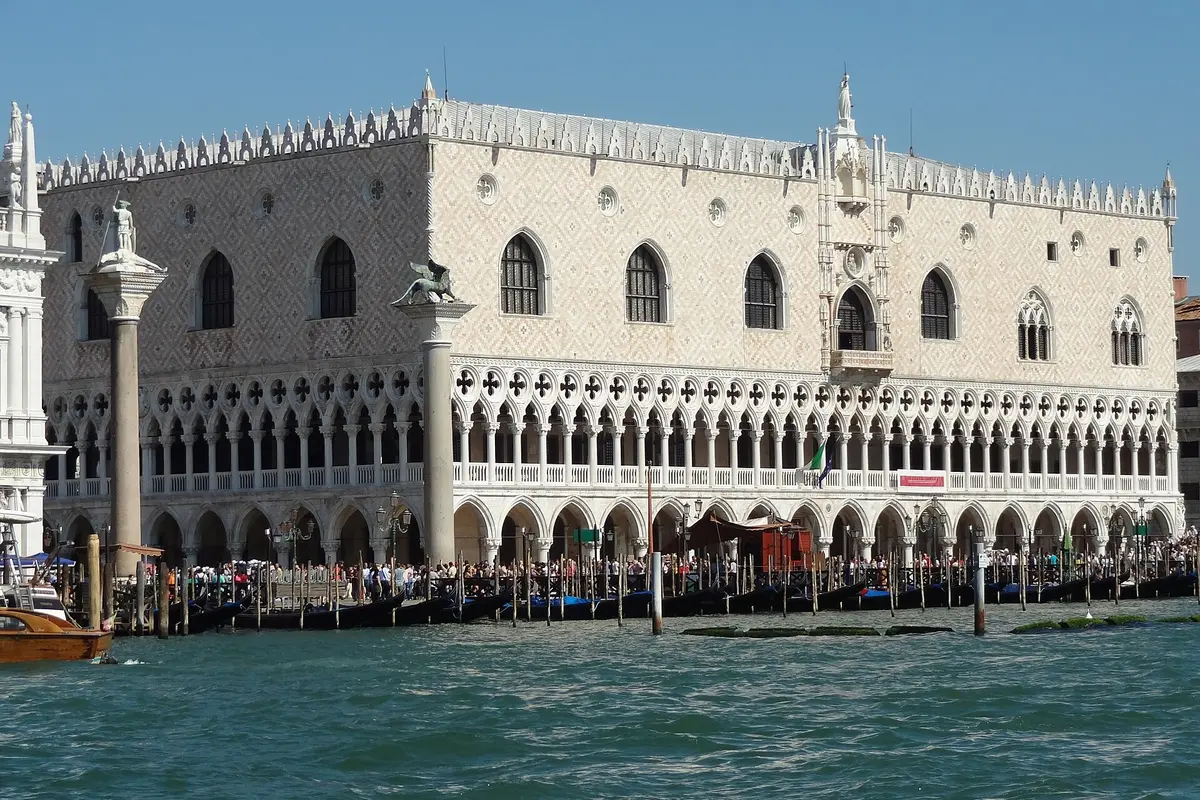
The public entrance is the Porta del Frumento on Piazzetta San Marco, beneath the portico of the 14th-century facade. From Piazzale Roma and the Santa Lucia railway station, the museum lists Line 1 to Vallaresso or San Zaccaria, Line 2 to Giardinetti, and Lines 5.1 or 4.1 to San Zaccaria. From the Lido it lists Line 1 and Line 5.2. For timetables it points to ACTV for water and land transport, ATVO for the airport shuttle and Alilaguna for its waterbus. Lines and stops change, so confirm them with the operator before you travel.
Read next: The Doge's Palace and St Mark's Basilica in one day
Entrance, exit and security
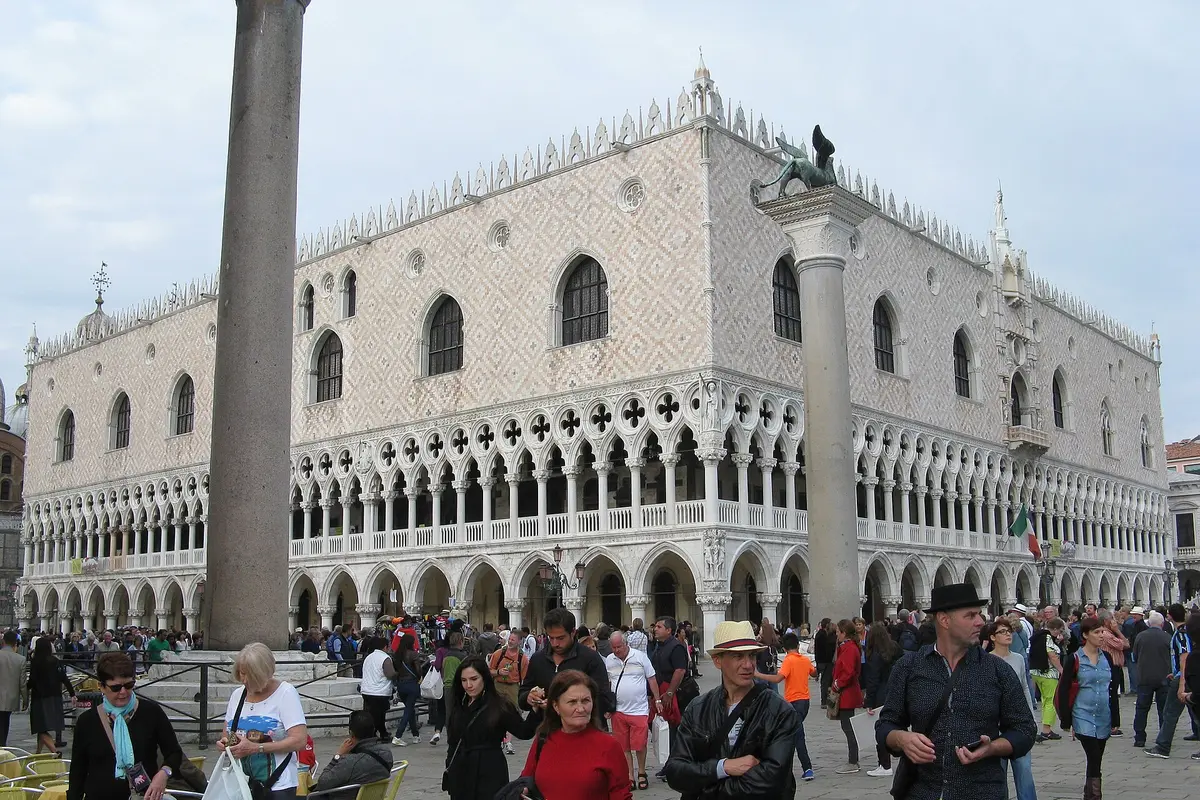
You enter at the Porta del Frumento, and the museum says visitors leave through the Porta della Carta, the monumental 15th-century gateway beside the basilica. Expect a security check: the museum states that bags and rucksacks may be checked at the entrances, and that a visitor whose face is covered with a veil will be asked for identification. Guided tours start at fixed times and the museum asks you to be at the entrance on time. Allow a few minutes at the cloakroom at both ends of your visit if you leave a bag there.
What to wear and what to leave behind
The museum's regulations bar beachwear, skimpy clothing and bulky clothing. They do not mention covering shoulders or knees. Luggage matters more: suitcases, trolleys and bulky bags whose three sides add up to more than one metre are not allowed in, so leave them elsewhere before you arrive. Medium-size bags, backpacks and umbrellas that security judges unsuitable go to the cloakroom, which is free. Food and drink may not be consumed in the exhibition areas, and alcoholic drinks are forbidden inside the museums. Because the route goes up and down through the building, travelling light also makes the bag rules easier to meet.
Photography, phones and audio
Flash, tripods and selfie sticks are prohibited. Low-resolution photos for non-profit use that involve no physical contact with the artworks are permitted. The regulations ask you to silence your phone and use it discreetly, to look at works without touching them, and to stay behind barriers. The audio guide runs on your own phone in six languages: Italian, English, French, Spanish, German and Korean. Download the free MUVE app, scan the activation QR code at the museum and check in. The app needs 500 MB of storage, and the Audioguide Desk can help if it does not activate.
What you will see and how long to allow
The museum gives no set duration for the standard visit. Its route goes up and down through the building, crossing floors more than once, and ends with the Armoury, the Picture Gallery and the Prisons. On the way you pass the chambers of the Great Council, the Senate and the Collegio. The Great Council chamber is 53 metres long and 25 wide. Below its ceiling runs a frieze of portraits of the first 76 doges, where Marino Faliero, who attempted a coup in 1355, appears only as a black cloth. Allow a generous block of time, and more if you add the other museums.
Children, families and access
Children aged 0 to 5 are admitted free, and children under 12 are not admitted unless accompanied by a parent or other responsible adult. The palace has a baby pit-stop room for breastfeeding and changing. Animals are not admitted apart from guide and service dogs, but a dog-sitting service can be booked through the Bauadvisor website and app. For access, the museum says the regular visit is fully accessible and the ground-floor toilets are accessible, while the Secret Itineraries, Prisons and Armoury are not. It also says tours can be remodelled for specific needs.
Read next: Visiting the Doge's Palace: practical notes
Cafe, shop and the other museums
On the ground floor, next to the courtyard, the museum runs a cafe, and a museum store sits at the end of the visit in the room that once housed the Lower Chancellery. Restrooms are available for visitors. The standard ticket also covers the Correr Museum, the National Archaeological Museum and the monumental rooms of the Marciana Library. The museum places the Correr in the Napoleonic Wing and the Procuratie Nuove around the square, and describes the three as an integrated route. Because you cannot re-enter a museum once you leave, finish the palace before you walk across to them.
Who this isn't for
If you want a short stop, the full route is a long one: it goes up and down through the whole building, and once you leave you cannot re-enter on the same ticket. If you cannot manage steps, the Prisons, the Armoury and the special itineraries are not accessible. If you plan to photograph with a tripod, flash or selfie stick, the rules forbid all three. And if you cannot commit to a ticket with a fixed entry time, remember that tickets without one are admitted only later in the day. And if you hope to rest in the state rooms, the regulations forbid sitting on chairs and sofas that form part of the displays.
Frequently asked questions
When is the best time to visit the Doge's Palace?
The museum publishes no crowd data, so there is no official quiet hour. What is firm: tickets without an entry time are admitted only later in the day, and winter hours are shorter than summer ones. Choose a ticket that shows an entry time, and check the museum's announcements for your date.
How do I get to the Doge's Palace?
By water bus or on foot. The museum lists Vallaresso and San Zaccaria as the main stops, plus Giardinetti. The public entrance is the Porta del Frumento on Piazzetta San Marco. Check ACTV for current lines and timetables.
Is there a dress code?
The museum's regulations bar beachwear, skimpy clothing and bulky clothing. Suitcases, trolleys and bulky bags cannot enter, and the cloakroom is free. The route goes up and down through the building, so comfortable shoes make sense, though none are required.
Can I take photos inside the Doge's Palace?
Yes, with limits. Flash, tripods and selfie sticks are prohibited. Low-resolution photos for non-profit use that involve no contact with the artworks are permitted. Silence your phone and use it discreetly.
Is the Doge's Palace wheelchair accessible?
The museum says the regular visit is fully accessible, with accessible toilets on the ground floor. The Secret Itineraries, Prisons and Armoury are not accessible. Check its accessibility page for your date, because arrangements can change.
Does high water close the palace?
The museum pages we checked do not say that high water closes it, and its announcements section lists extraordinary changes. High water occurs mainly between autumn and spring, and the city's forecast centre usually forecasts it about 48 hours ahead. Check both before you go.
Sources
- Doge's Palace official site: visitor information and opening seasons
- Doge's Palace official site: layout and collections
- Doge's Palace official site: services and accessibility
- Doge's Palace official site: MUVE app audio guide
- Fondazione Musei Civici di Venezia: museum regulations (PDF)
- Wikipedia: Acqua alta
- Wikipedia: Doge's Palace